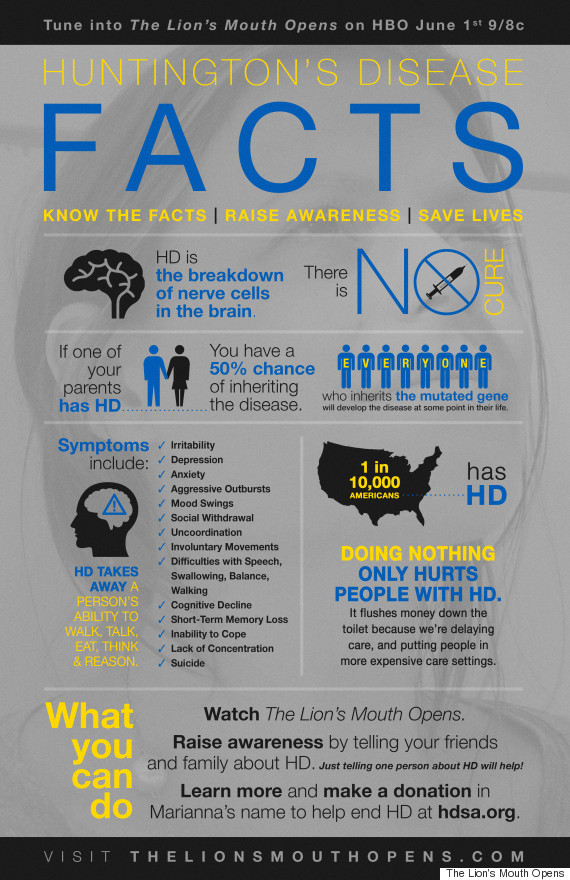
Did You Know? 1 in 10,000 Americans have Huntington’s Disease
Huntington’s Disease (HD) is the Breakdown of Nerve Cells in the Brain
Huntington’s Disease is a genetic neurological disorder that causes the progressive breakdown of nerve cells in the brain, which impairs a person’s functional abilities, resulting in cognitive, motor and psychiatric disorders.
Every child of a parent with HD has a 50% chance of inheriting the gene that causes the disease. If the child has not inherited the gene, he or she will not develop the disease and cannot pass it on to their own children.
Please read and share this guide to help raise awareness about Huntington’s Disease, including signs and symptoms, treatment and support options.
01 | Onset, Signs and Symptoms
Most people develop symptoms in their 30’s or 40’s; symptoms progressively worsen and include:
When symptoms appear before age 20, the condition is called Juvenile Huntington’s Disease. Symptoms differ and include unsteadiness, rigidity, seizures and difficulty at school.
02 | Treatment
Currently, there is no known cure for HD and no treatment that can stop or reverse the progression of the disease. However, there are medications that can help with symptoms such as chorea, hallucinations, depression and anxiety.
03 | Support
Due to the progressive nature of the disease, patients will eventually require assistance with daily activities and care. Therefore, it is important to create a supportive environment in the early stages of the disease. In later stages of HD, professional care may be required, either at home or in a long-term facility.
For additional resources on awareness and living with Huntington’s Disease, visit Huntington’s Disease Society of America at: http://hdsa.org/living-with-hd/
References
http://www.ninds.nih.gov/disorders/huntington/huntington.htm
http://www.mayoclinic.org/diseases-conditions/huntingtons-disease/basics/definition/con-20030685
http://i.huffpost.com/gen/3018560/thumbs/o-HUNTINGTONS-DISEASE-570.jpg?4